

Introduction
Investing in a modern Lianshun Machinery PVC Profile Extrusion Line helps manufacturers navigate the complex labyrinth of global green building codes, which often present compliance confusion regarding energy efficiency and material recycling. As statutory regulations like the EU’s Energy Performance of Buildings Directive (EPBD) and LEED v4.1 tighten, plastic fabricators struggle to balance sustainable metrics with high production throughput. This article unpacks how our engineering innovations are turning these regulatory challenges into concrete operational advantages.
The Regulatory Catalyst: LEED, BREEAM, and Next-Generation Lianshun Machinery PVC Profile Extruder Machine Specifications
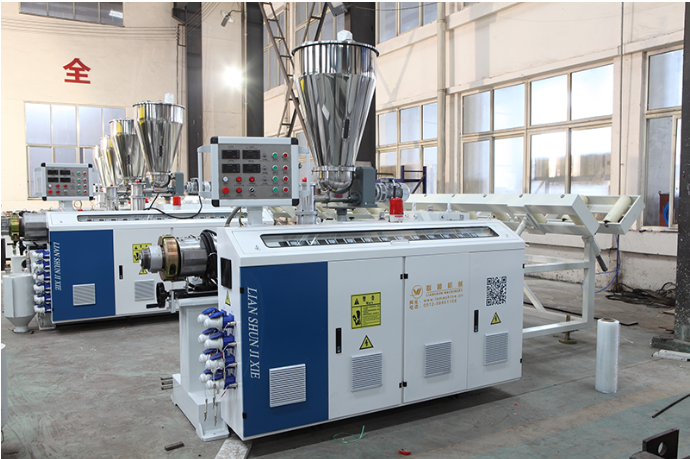
Stricter environmental standards now force manufacturers to re-evaluate their production machinery to remain competitive in global construction markets.
Carbon Footprint Mandates and Co-Extrusion (Co-Ex) Technological Shifts
According to the European Council for Plasticizers and Intermediates (ECPI), utilizing recycled material cuts carbon emissions by up to 80% compared to virgin PVC resin. To meet stringent LEED v4.1 material ingredient credits, modern Lianshun Machinery lines utilize advanced co-extrusion technology. This technique places a high-percentage recycled core between flawless layers of virgin PVC.
Precision Thermal Insulation and Window Profile Geometry Calibration
Global green codes require lower window U-factors (thermal transmittance) to mitigate building energy loss.
- ✓ Modern Lianshun Machinery calibration tables secure the exact structural geometry of complex, multi-chamber profiles.
- ✓ Precise cooling ensures tight tolerances, enabling structural chambers to trap air efficiently and meet BREEAM insulation standards.
Hardware Innovations: How to Select an Eco-Compliant PVC Profile Extrusion Line
Upgrading your hardware is the most direct path to aligning your factory floor with international green procurement metrics.
High-Efficiency Screw Designs for Processing Recycled Post-Consumer Rigid PVC (r-PVC)
Processing r-PVC introduces critical challenges, particularly regarding irregular scrap sizing and localized polymer degradation. Lianshun Machinery designs advanced parallel twin-screw configurations that optimize flight depth and length-to-diameter (L/D) ratios. This specialized engineering delivers uniform melt homogeneity and prevents thermal degradation without slowing down production outputs.
Closed-Loop Energy Recovery Systems in Extrusion Barrels and Heating Zones
Thermal management demands substantial electricity during continuous extrusion runs.
- ✓ Induction Heating: Replaces traditional ceramic bands to reduce heat-up times by 30%.
- ✓ Closed-Loop Cooling: Automated air/water cooling blowers maintain precise zone temperatures.
- ✓ Energy Savings: These combined hardware enhancements drop overall energy consumption below 0.25 kWh/kg.
Intelligent Automation: Maximizing Material Yield and Minimizing Floor Scrap
Smart automation systems remove human error from the sustainability equation, keeping your material yields exceptionally high.
Real-Time Gauge Control and Online Wall Thickness Measurement
To witness how these systems operate under high-capacity demands, consider the automated setups engineered by Lianshun Machinery. Integrated ultrasonic sensors continuously measure outer profile walls during production. If the wall thickness fluctuates by even 0.05 mm, the system automatically alters the extruder speed, instantly saving costly PVC resin compounds.
| Metric Parameter | Legacy Extrusion Systems | Modern Lianshun Machinery Lines |
| Scrap Rate | 4.5% – 6.0% | Under 1.5% |
| Thickness Tolerance | 0.20 mm | 0.03 mm |
| Material Yield | Baseline | + 3.5% Increase |
Integrated Hot-Cutting and Scrap Reclamation Scenarios
Traditional sawing mechanisms generate significant plastic dust and rough profile edges that require secondary processing. Incorporating a Lianshun Machinery automated hot-cutting system eliminates airborne particulates entirely. The clean-cut scrap profile ends are instantly routed to an adjacent granulator for immediate re-feeding into the co-extrusion core.
Strategic Conclusion: Future-Proofing Your Plant with a Sustainable Lianshun Machinery PVC Profile Extrusion Line
Transitioning to low-emission machinery represents a major strategic upgrade that directly protects your future commercial margins.
Moving Beyond Compliance to Secure High-Premium B2B Supply Contracts
Regulatory compliance is no longer a bureaucratic hurdle; it is a premium commercial asset. High-tier commercial developers exclusively source window profiles from verified sustainable supply chains. By running an energy-efficient, scrap-free Lianshun Machinery PVC Profile Extrusion Line, your factory gains immediate entry onto lucrative B2B green procurement shortlists.
Optimize Your Production Line Today
Ready to future-proof your plastic manufacturing facility and satisfy international green building mandates? Contact Lianshun Machinery’s engineering team today for a custom machine blueprint or request an instant equipment quote.
Frequently Asked Questions
How does a Lianshun Machinery PVC profile extrusion line support circular economy targets?
An eco-compliant Lianshun Machinery PVC profile extrusion line supports the circular economy by using advanced co-extrusion screws that process up to 70% recycled post-consumer rigid PVC (r-PVC) within the inner core of window profiles, significantly reducing plastic waste and saving raw material costs.
What role does hot-cutting play in reducing industrial factory waste?
Hot-cutting systems eliminate the micro-plastic dust and material chips generated by traditional saws. By creating perfectly clean edges right at the calibration table, this technology minimizes post-industrial scrap and allows immediate reclamation of trimming waste back into the production cycle.
Why is energy efficiency critical for modern extrusion line procurement?
Energy efficiency directly determines a manufacturer’s compliance with green building codes like LEED and carbon neutrality audits. Implementing modern induction heating and optimized twin-screws drops energy usage beneath 0.25 kWh/kg, lowering overhead expenses and reducing total factory emissions.
Post time: Jun-18-2026


